
)
)
Reengineering the Grid: Delivering a Secure, Affordable Energy System Through Innovation
One of the most exciting things about working at SSEN Transmission right now is the scale of what we are delivering.
We are investing £29 billion to upgrade the electricity transmission network across the north of Scotland. Rising renewable generation, faster delivery expectations, and greater demands for resilience and energy security require new ways of thinking and working.
That is why innovation sits at the heart of how we plan, build and operate the grid.
Our innovation programme is shaped around four clear focus areas – safer, smarter, greener and faster. These guide how we prioritise practical, value-adding projects that reduce risk, make better use of data and digital tools, cut environmental impact, and accelerate delivery where it matters most.
Together, these priorities help us deliver a safe, resilient and future ready energy system for the north of Scotland and Great Britain. For us, innovation is not about technology for its own sake, but about finding better ways to deliver the infrastructure the energy transition depends on. With Innovation Zero approaching, we look forward to sharing this work, learning from others, and contributing to the wider debate on innovation’s role in the transition.
Turning ambition into action
Enabling clean, renewable power to flow reliably at scale is central to meeting clean power targets and strengthening energy security. Achieving this requires a transmission network that is flexible, resilient and fit for the future – and innovation is one of the most important tools we have to make that happen.
Support from Ofgem, particularly through the Strategic Innovation Fund (SIF), has played a key role in helping us turn ideas into real world solutions. Earlier this year, we secured £6.9 million of funding for four SIF innovation projects, reflecting both the strength of our partnerships and the practical focus of our innovation programme.
One example is our REVISE project, which received £5.8 million of SIF funding for the Beta phase that supports large-scale demonstration projects. At its core, REVISE is targeted at improving how we calculate overhead line ratings by making better use of data, particularly regional weather information. Instead of relying on conservative assumptions, the project combines high-resolution meteorological data with advanced modelling to understand how assets perform in real operating conditions.
What makes REVISE particularly powerful is the collaboration behind it. We are working closely with National Grid Electricity Transmission, SP Energy Networks, the National Energy System Operator, the Met Office, the University of Strathclyde and Energyline to develop an approach that can unlock additional capacity, reduce operating costs and support better long-term investment decisions across Great Britain’s transmission system.
Learning more from the weather around us
REVISE sits within a wider portfolio of projects delivered with the Met Office, all focused on using weather-led modelling to solve practical engineering challenges. The aim is simple – to extract more value from the existing network without compromising safety or resilience.
Two projects that clearly demonstrate this approach are Ice Mapping and Corrosion Mapping.
Ice build‑up on overhead lines is a major consideration in the north of Scotland. Traditionally, ice risk has been assessed using broad assumptions applied over large geographic areas. Through Ice Mapping, we have developed a more sophisticated, layered model that draws on detailed weather data to reflect local conditions more accurately.
The benefits are clear. On the Kintore to Dyce overhead line upgrade, this approach is estimated to have saved around £30 million by avoiding unnecessary strengthening and over‑engineering. Across our wider project portfolio, forecast savings linked to Ice Mapping are now around £125 million. Just as importantly, it supports safer construction, faster delivery and better overall outcomes.
Corrosion Mapping applies the same principles. By accounting for local climate, topography and coastal effects, the model enables more informed decisions on materials, design and long-term maintenance, resulting in assets that last longer and perform more reliably over their lifetime.
Keeping the lights on while we upgrade
Innovation is not limited to modelling and analytics. We are also proud of our pioneering work on mobile substations, with SSEN Transmission among the first transmission operators in northern Europe to deploy this technology.
Traditionally, upgrading major substation equipment has required lengthy outages or the construction of new permanent infrastructure, both of which can be disruptive and costly. Mobile substations provide an alternative.
By enabling equipment to be replaced in situ while keeping power flowing, mobile substations significantly reduce outage durations. This helps generators remain connected, limits disruption for customers, and supports the continued delivery of renewable power during major upgrade works.
The approach also reduces the need for permanent construction, delivering environmental benefits alongside greater operational flexibility. It is a strong example of how innovation can make network upgrades safer, faster and lower impact.
Focusing effort where it matters most
All of this work sits within three Innovation Priority Areas that guide how we focus our efforts.
The first, and most important, is maximising network capacity to enable faster, lower- cost connections. This means making better use of existing assets alongside building new infrastructure where it is genuinely needed.
Dynamic Line Rating (DLR) provides a good illustration. We now operate the largest DLR network in the UK, with technology installed across more than 300 kilometres of overhead line north of Beauly. By using real-time environmental data to calculate true live capacity, DLR enables the network to be operated more efficiently than static ratings ever could.
Sensors feed conductor temperature data into cloud-based algorithms, generating real-time and forecast ratings that can then be shared with the National Energy System Operator. This supports better balancing decisions and helps reduce constraints. While network reinforcement remains essential, DLR provides a cost-effective way to unlock additional capacity and reduce costs for consumers when weather conditions allow.
Building resilience into an evolving system
Our second innovation priority focuses on system stability and security. As more non‑synchronous renewable generation connects, challenges around voltage control, inertia and system restoration will increase, while growing digitalisation brings new cyber risks that must be carefully managed.
Projects such as Aquila Lite, funded via Ofgem’s Network Innovation Allowance (NIA), are helping us respond. In a world-first, the project has demonstrated a software interface that enables High Voltage Direct Current (HVDC) systems from different manufacturers to operate together, allowing controls and main circuits to work seamlessly and removing the need for costly AC/DC conversion between systems.
This interoperability lowers capital costs by reducing the need for additional converter stations and strengthens supply chain resilience by avoiding reliance on a single vendor. The project has also delivered a patented, multiterminal, multivendor HVDC control approach, marking a significant step forward in unlocking the potential of offshore HVDC networks to support clean power and energy security goals.
Smarter maintenance through robotics and AI
We are also seeing benefits for system stability and security through autonomous inspection and data-driven asset management.
In 2024, we deployed an autonomous robot at our Blackhillock HVDC switching station, the first deployment of its kind in Scotland. Developed by robotics specialist Ross Robotics and known as “Haggis”, the robot inspects equipment and identifies emerging issues without putting people at risk.
Building on this, our ODIN project, funded through Ofgem’s SIF programme, has been awarded £455,450 to advance the use of autonomous inspection and AI-driven analytics for high voltage converter station asset management. Using live data gathered by robots, the project will develop targeted condition-based maintenance tools designed to minimise outages, extend asset life and improve overall network resilience.
Innovation at the pace of delivery
Our third priority area is Infrastructure Delivery and Commissioning. Delivering transmission infrastructure at this scale presents challenges well beyond engineering, from consenting and supply chain capacity to commissioning readiness.
To support this, we are developing new tools such as the Year Ahead Outage Optimiser, which uses advanced decision support algorithms to improve outage planning. By identifying clashes and risks early, it enables faster, better informed decisions and will support with the complexities of planning a renewable energy system.
The result is a more stable, coordinated and efficient approach to delivery, helping protect system security as network activity continues to increase.
Sharing what we learn
Finally, this innovation does not sit in isolation. We are committed to sharing learning from our projects across the wider transmission sector through the Energy Networks Association and other forums.
By sharing data, insights and methodologies, we can avoid duplication, support consistent standards and accelerate the adoption of solutions that work, strengthening the resilience and efficiency of the GB transmission system as a whole.
Innovation is not a side project for us. It is how we are re‑engineering the grid to meet the challenges of the energy transition, and it will play a defining role in the future success of the transmission network.
We look forward to showcasing this work at Innovation Zero and engaging with policymakers, industry partners and innovators across the energy system. If you are attending the conference, we would encourage you to come and speak to us about how innovation is helping deliver a more secure, resilient and affordable electricity network for the future.
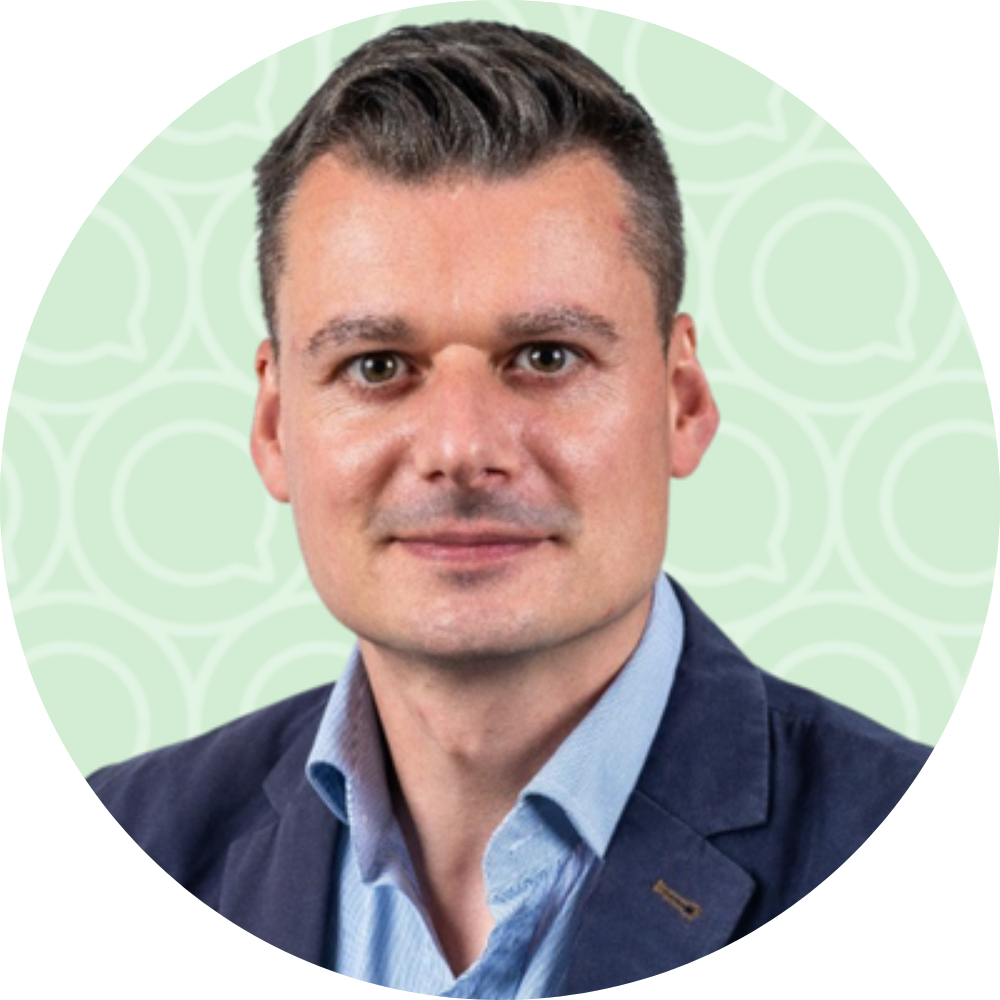
Alan Ritchie, Senior Manager of Innovation, SSEN Transmission