
)
)
Looking Back: Unplugged – A Conversation with Energy Leaders at Innovation Zero World 2025
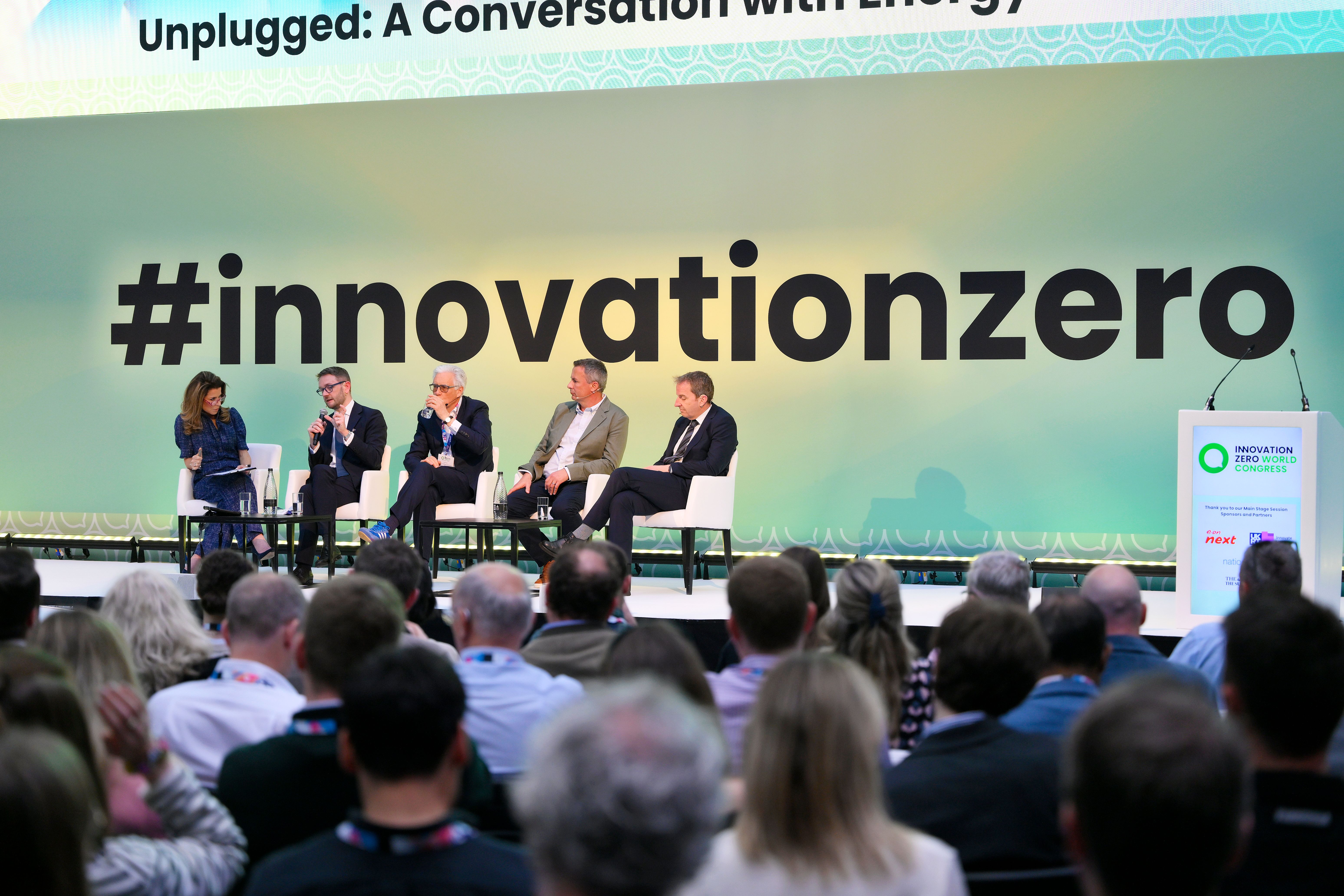
At Innovation Zero World 2025, the session “Unplugged - A Conversation with Energy Leaders” brought together senior figures from UK energy policy, networks and retail supply to discuss how the transition will actually be delivered.
Key topics of discussion around electrification, affordability, infrastructure and public trust remain extremely relevant to the Main Stage at Innovation Zero 2026, with Adair Turner joining Laura Sandys to explore public acceptance around next zero, and Chris Norbury digging into reducing energy costs for consumers.
We hope that the discussion below inspires you to join us this year – call to action to register?
From targets to systems
Opening the discussion, Lord Adair Turner addressed a question that still underpins the public debate: whether a highly renewable electricity system can operate reliably.
His point was not that the transition is simple. The UK’s challenge lies in system design. Northern European grids must manage extended periods of low wind output, meaning storage, flexibility and network capacity are essential parts of the solution rather than secondary considerations. The discussion therefore focused less on choosing technologies and more on how the electricity system is structured around weather and demand.
Electrification is the larger change
A consistent theme throughout the session was that decarbonising power generation alone does not deliver net zero. Turner framed the issue directly:
While renewable generation has expanded rapidly, electrification of heating, transport and industry has progressed more slowly. The panel suggested the next phase of the transition will depend on adoption decisions made across millions of households and businesses.
Chris Norbury reflected this from the perspective of a supplier working directly with customers:
In practice, this means heat pumps, electric vehicles and industrial electrification moving to the centre of energy policy - changes that affect everyday behaviour rather than only infrastructure planning.
Investment signals and delivery
The panel also discussed the relationship between policy direction and private investment. Norbury emphasised the importance of long-term clarity:
Clear policy does not remove delivery constraints - grid capacity, planning and connections remain significant - but it reduces uncertainty. The discussion suggested that the pace of the transition now depends as much on planning processes and network expansion as on capital availability.
A different role for consumers
Another theme was the changing role of households and businesses within the electricity system. Future grids rely not only on generation capacity but also on when electricity is used.
Time-of-use tariffs, smart EV charging and flexible heating systems allow demand to help balance supply and reduce peak costs. However, this also means the transition depends on participation and understanding, not solely infrastructure.
The question of cost
The conversation repeatedly returned to how the transition is funded and who experiences its effects first.
Lord Adair Turner: “We have chosen to put the early costs of the transition on the electricity bill rather than the gas bill.”
This creates a policy tension: electrification is necessary, yet relatively higher electricity prices can slow adoption of electric heating. Norbury suggested additional protections may be required.
The discussion framed the transition not only as a technological or environmental challenge, but as a distributional economic one - a question of timing, affordability and fairness.
Trust and communication
Finally, the panel addressed public confidence. Infrastructure expansion, heating changes and tariff reform affect households directly, and acceptance cannot be assumed.
The speakers suggested that the pace of the transition will depend not only on engineering or finance but on credibility - whether consumers understand the rationale and see tangible benefits.
Why revisit the discussion now
Since Innovation Zero World 2025, the transition has entered a more practical phase. Grid upgrades, electrification policies and market reforms are now active policy decisions rather than future plans.
The Unplugged session captured an early point in that shift - when attention moved from targets to implementation. The same questions remaincentral today: infrastructure delivery, consumer participation and cost allocation.
Innovation Zero 2026 will return to those themes, continuing a conversation that has become increasingly immediate over the past year.
Key topics of discussion around electrification, affordability, infrastructure and public trust remain extremely relevant to the Main Stage at Innovation Zero 2026, with Adair Turner joining Laura Sandys to explore public acceptance around next zero, and Chris Norbury digging into reducing energy costs for consumers.
We hope that the discussion below inspires you to join us this year - to be part of the discussion register now.