 Skip to main content


Bridging the gap between ambition and action in the climate transition
Recently, GFI announced it would co-chair the Green Home Finance Strategic Partnership with DESNZ as part of the Warm Homes Plan. The partnership aims to mobilise billions in private capital to enable consumers to upgrade their homes when they choose. Ryan Jude, the GFI’s built environment programme director and one of the speakers at the upcoming Innovation Zero World Congress, spoke to us about some of the key issues facing the sector.
Why should local authorities be prioritising the importance of providing local green energy?
Local authorities have a crucial role to play in the transition - both directly on their own emissions and indirectly in council-wide emissions - investing in local green energy is a really important part of this. Councils are normally responsible for around 2-5% of their own emissions, so investing in local green energy helps them bring down their own council emissions. Through various avenues such as planning, how they’re developing highways and their approach to local housing, they can promote more green energy in the local vicinity. I think it’s really important that local leaders acknowledge this because local politicians can set the tone for what is achievable locally but also set the direction and create the enabling environment for this local investment and ultimately, it’s benefits that we want to see. We want to see cheaper bills for residents, for those who are renting, for those who own their properties and for local businesses and that only comes about if we can invest in good, clean, cheap green energy.
What support is needed to equip local authorities for energy planning and delivering place-based energy strategies?
I think there are three main areas that councils need support. The first is in creating those plans, the second is in project and pipeline development, and then the third is in actual delivery and funding.
With the first, over 15 years we’ve seen council budgets steadily decreasing, which has meant it’s difficult sometimes to justify resources for what we call non-statutory duties, climate being one of those. So, support is often needed to help develop those foundational plans. We have now seen many councils bring out local area energy plans, but we know there’s a move towards standardising what those look like, which help create that base for what investments are needed locally.
The second bit is on project development, which helps councils to develop the pipeline for those priority local investments. And then the third bit is around looking at the different funding sources that are available to them. So obviously there’s grants being made available by governments, but the new government has also set up the National Wealth Fund, which can support in this.
The Local Power Plan came out recently, which talks to how public money can support community energy schemes locally. And then also there is the world where private investment can come along and support this infrastructure locally. So, all three of those areas mean ever so slightly different amounts of support for councils, but they’re all just as important as each other.
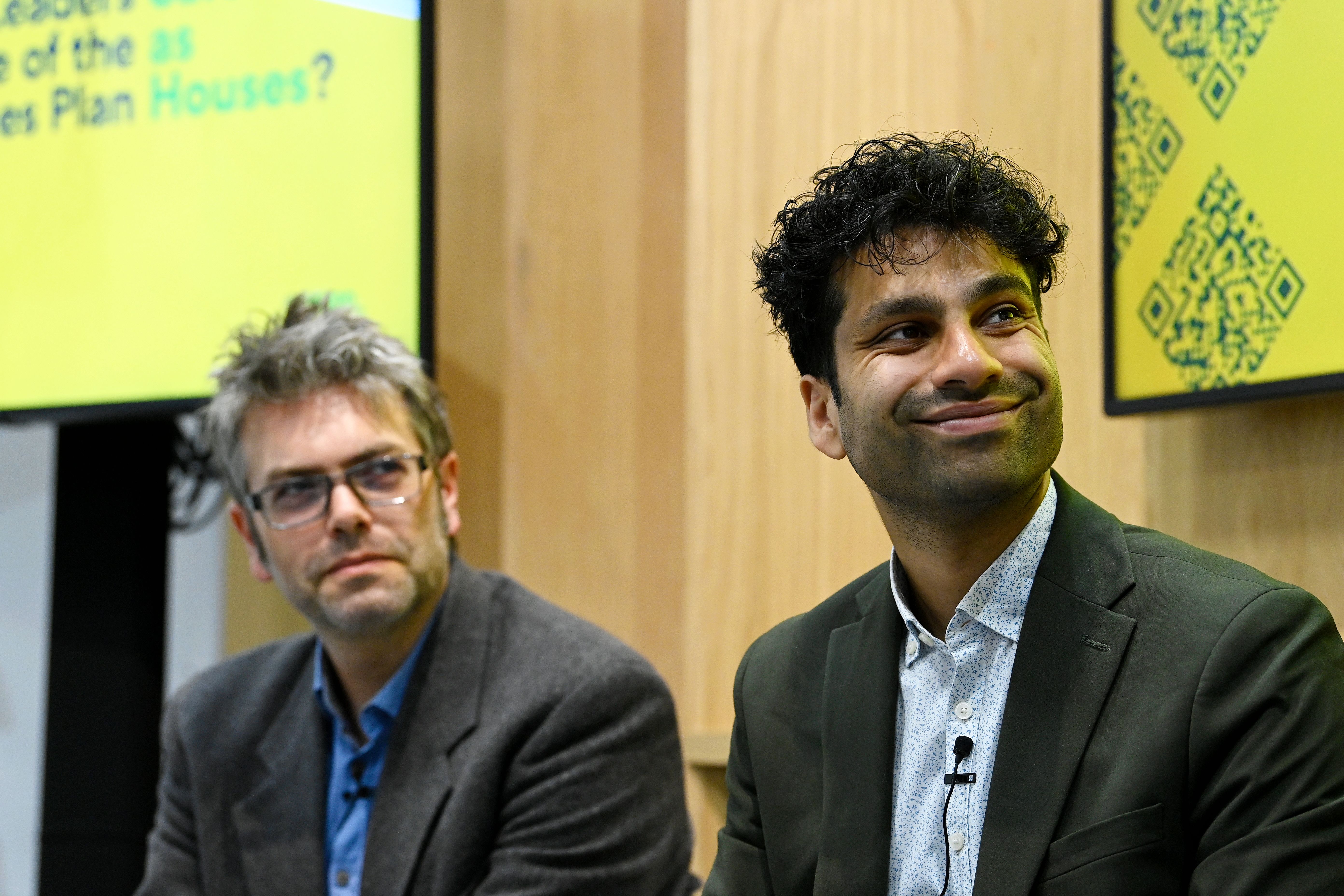
Ryan pictured alongside Energy Saving Trust's Stew Horne during the "Safe as Houses?" Working Group at Innovation Zero World 2025
What can be done to support investment into activities aligned with sustainability goals?
Firstly, the benefits need to be shown by local authorities and by those who are communicating about these sorts of investments. So those benefits, of course, are cheaper bills, healthier homes, less mould and damp in homes, local jobs for local people and of course, fighting climate change. So, this helps give the political support.
In terms of actually getting the investment into the project, you need that proper pipeline of investable opportunities. We often see at the Green Finance Institute that while national and local governments can set those higher targets to reach net zero, to decarbonise a certain stock of assets, what investors and developers need is the actual tangible projects on the ground. And bridging that gap is where GFI comes in, where we support with the enabling environment, the policy environment to enable these things to happen, but also with the different finance solutions and products that can then help the thing get built.
What is the Green Finance Institute doing to make the bridge between ambition and action in the climate transition?
The GFI is a unique organisation. We’re a non-profit that provides the neutral platform to co-design, test and scale different financial solutions and products, all with that singular mission of mobilising capital, both public and private, towards the transition. And again, it all comes back to making sure that those benefits can be felt on the ground, because a greener future is a future with cheaper energy bills, with good local jobs for communities across the country and a healthier environment for people to grow up in.
So at GFI, we look at the policy environment we need to help create nationally and locally to make these projects feasible, but also where is the gap? Where do financial products need to be developed? Where can some of the emerging public financial institutions such as the National Wealth Fund and GB Energy, where can they support? Then ultimately how can we make it stack up economically so that wider investors come and get involved in investing in these projects? And that’s what we're trying to do at GFI.
Ryan Jude is one of the speakers at this year’s Innovation Zero World Congress taking place in London from 28-29 April.