
)
)
What Andy Burnham's Appointment Could Mean for the UK's Energy Transition
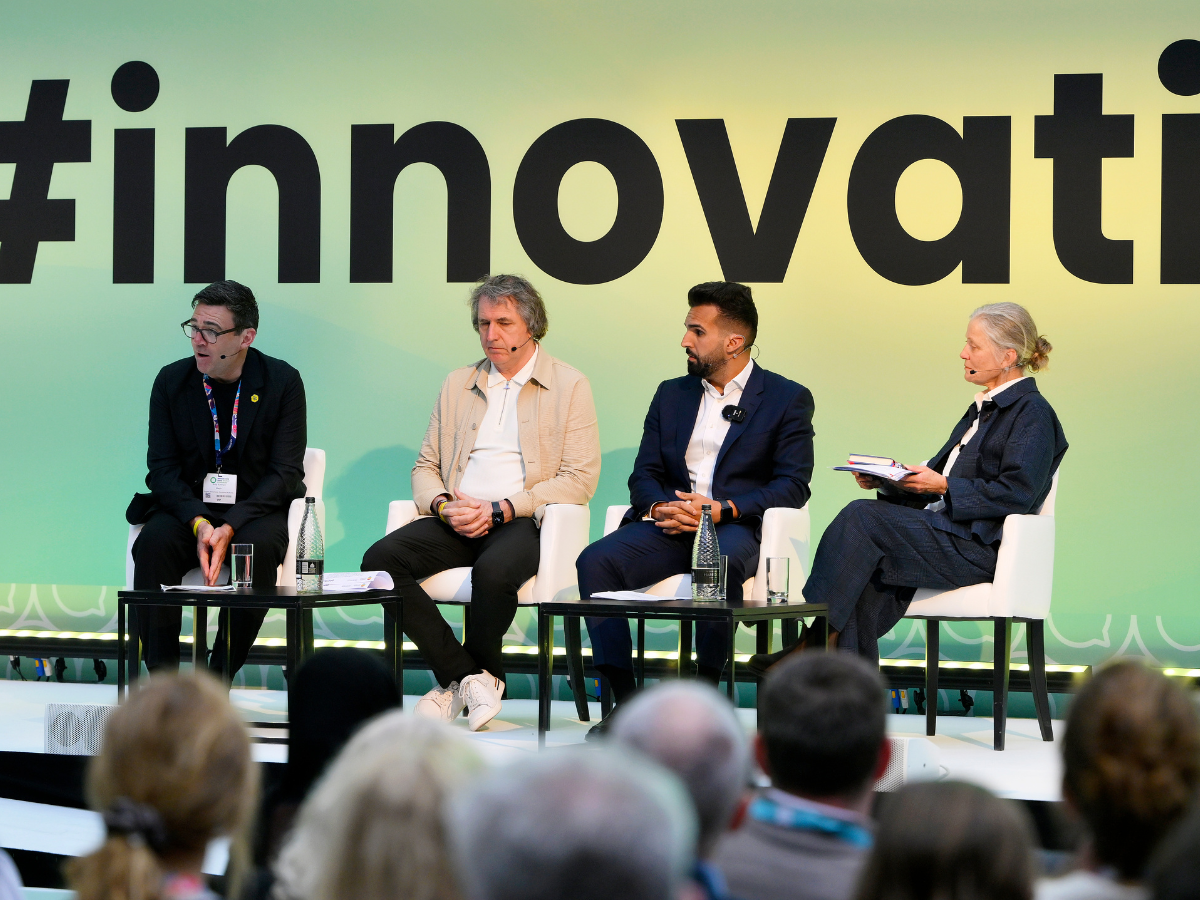
UK Prime Minister Andy Burnham speaking at Innovation Zero World 2025 in his former capacity as Mayor of Greater Manchester. Photoed alongside Steve Rotheram, Mayor of the Liverpool City Region; Mete Coban MBE, Deputy Mayor of London for Environment and Energy, and Emma Howard Boyd CBE, Chair of the National Heat Risk Commission.
It has been less than two weeks since Andy Burnham became Prime Minister, becoming the seventh person to hold the office in the past decade. While the new Government is still in its early days, its initial priorities - including place-based growth, economic resilience and the cost of living - are beginning to provide an indication of the direction of travel.
For businesses investing in and delivering the UK's energy transition, the months ahead will be significant. Government policy plays a central role in shaping markets, unlocking investment and creating the conditions needed for innovation and deployment to scale.
Anyone who followed Burnham's time as Mayor of Greater Manchester, will recognise those priorities. Throughout his mayoralty, he consistently championed devolution and place-based growth, arguing that empowering regions is fundamental to driving investment, improving productivity and supporting long-term economic development.
That approach was reflected in Greater Manchester's own agenda, including the expansion of its electric bus network and continued investment in low-carbon infrastructure and energy projects. Burnham also participated in Innovation Zero during his time as Mayor, contributing to discussions around regional growth, infrastructure investment and the practical delivery of the energy transition. Whether those priorities now translate into national policy remains to be seen, but they offer an early indication of the themes that may shape the Government's approach.
One of the first major tests will be the Government's position on the Jackdaw and Rosebank North Sea developments. Although both projects received approval under previous administrations, speculation continues over whether they will proceed.
The debate reflects the wider challenge facing policymakers. Supporters argue that continued domestic oil and gas production can strengthen energy security, support skilled employment and provide stability during the transition. Others question the long-term economic and environmental implications, pointing instead to the UK's climate commitments and the need to accelerate investment in low-carbon alternatives. Whatever decision is ultimately taken, it will be closely watched by businesses, investors and the wider energy sector.
Attention has also focused on the appointment of Miatta Fahnbulleh as Secretary of State for Energy Security & Net Zero. Having previously served as Parliamentary Under-Secretary of State for Energy Consumers, she brings experience of the department at a time when significant decisions are expected across energy, infrastructure and industrial policy.
Alongside ministerial appointments, the Government's wider approach to electricity networks, industrial electrification, clean energy investment, hydrogen, carbon capture and advanced manufacturing will be equally important. Together, these policies will help determine how successfully the UK can strengthen energy security, improve competitiveness and accelerate deployment across the economy.
As the Government's agenda develops, many of these questions will move from political commitments to practical delivery. For businesses planning long-term investment, clarity around policy and regulation will remain essential in creating the confidence needed to deploy new technologies and scale low-carbon solutions.
These are the conversations Innovation Zero was created to facilitate. By bringing together policymakers, industry leaders, investors and innovators, we provide a platform to explore how policy can accelerate deployment, unlock investment and remove barriers to delivery. As the Government's agenda takes shape, we look forward to continuing those discussions with the organisations helping to shape the UK's energy and industrial future.